


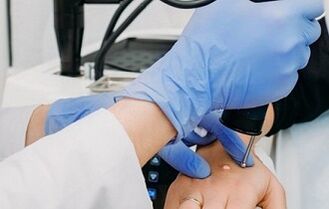
Doctors classify warts as benign neoplasms.However, they have an unaesthetic appearance, so many people want to get rid of them.The choice of the optimal removal method depends on the type of wart.
What are warts and what do they look like?
Warts are new growths on the skin that are mostly benign.Externally, it resembles a tubercle with a rough surface.At first, the neoplasm is flesh-colored, but over time it can change: it becomes brown or even black.
Warts can be single or in clusters.In the second case, a relatively large formation is formed, spherical or, less often, cone-shaped, with a wide base.
Warts vary in size, averaging a few millimeters.Warts appear on various parts of the body, most often on the hands.
Causes of warts
They arise due to severe proliferation of the surface layer of the skin.This is caused by the human papillomavirus (HPV).Infection occurs through direct contact with a virus carrier or through common objects, such as razors.
For HPV to enter the body, it needs a so-called entry point - a scratch or cut on the skin.After penetrating the epithelial cells, the virus moves towards the nucleus.In it, further development and reproduction take place.If the immune system is functioning normally, the infected cells will be destroyed.HPV can "sleep" in the body for years without manifesting itself.And only with weak immunity, it begins to affect many epidermal cells, which leads to the appearance of warts.
Types of warts
Depending on the type of HPV, there are several types of warts.
- It's normal.They have the appearance of nodules up to 1 cm in size with a densely wrinkled, flesh-colored surface, which over time can turn gray-brown.They are usually located on the back of the hands, palms, and feet.Often found in school age children.
- Plantar (pine).This is a dense and keratinized area with an irregular shape, but with a clear border.Outwardly they resemble thorns or calluses, only they are characterized by pain.Its size reaches 2 cm.They are most often localized on the feet, less often on the palms.
- Pointy (condyloma).They look like soft flesh-colored or pink nodules, reminiscent of the inflorescence of a cockatiel or cauliflower.They are usually located on the genitals and around the anus, less often on the tongue.
- Flat (ageless).They look like nodules, slightly raised above the skin, have a flesh-colored, brown or pale yellow smooth surface.They are located mainly on the face, neck, and back of the hands.
- Filiform (acrochords).This is an oval-shaped elastic neoplasm, up to 6 mm long.They are flesh colored or dark brown.Favorite places of localization are the eyelids, chin, armpits, groin area, under the mammary glands.
There is another type of wart that appears in older people - age-related keratoma.It is not caused by HPV, but due to hormonal changes.Such formations can degenerate into malignant tumors, so they also require removal.
Of all the types, common and plantar warts are the most common.
How to get rid of warts

Any type of wart does not harm the body, but can spoil the appearance or cause discomfort.So, plantar warts can hurt when walking.When the skin is damaged, neoplasms grow easily.This happens if it is located in a place that is often injured, for example during shaving.In such cases, it is better to use wart removal.
There are many ways to get rid of warts.They are most often removed using the following methods:
- cryo destruction;
- electrocoagulation;
- laser therapy.
All procedures are painless as they are performed under local anesthesia.
The removal method is chosen by a specialist depending on the type of wart and its location.
Cryodestruction
This is one of the simple and common ways to get rid of warts of all types.The neoplasm is briefly exposed to cold liquid nitrogen, the temperature of which is -196 degrees.As a result, a significant spasm of the capillaries of the wart tissue occurs, the formation of ice crystals inside the cells, the cessation of blood circulation and the cessation of metabolic processes.All this causes the destruction of the neoplasm.
The mechanism of the procedure is simple.The doctor dips a cotton swab in liquid nitrogen and then dabs it on the wart for 15-30 seconds.Application time and number of procedures depends on the size of the wart.Sometimes one cryotherapy session is enough for the tumor to disappear.
Among the obvious advantages of the procedure are:
- lack of special training;
- minimal risk of scarring;
- no bleeding or threat of infection;
- no anesthesia is required;
- affordable price.
Electrocoagulation
This removal method involves the use of high frequency current.It leads to an increase in temperature in the tissue and the subsequent destruction of the tumor.Before the session begins, the specialist treats the skin around the wart with an antiseptic and gives anesthesia.This procedure involves the use of a special device - a coagulator, which, using electrodes heated to 80 degrees, burns the tumor.After removal, a dark crust appears at the site of the wart, which dies after a while, and the wound is covered with healthy skin.
This procedure is usually carried out on the day of contacting a specialist, as it does not require special preparation.In one session, medium-sized tumors can be removed immediately.However, this method is not suitable for removing plantar warts.In this case, there is a high risk of scar formation, which can then cause discomfort when walking.
Laser therapy

The use of lasers to remove warts is based on the thermal effect of the light beam, which literally evaporates the tumor.This procedure is quite effective, but may leave scars.
Several types of lasers are used to remove warts.Among the most common are pulse, erbium and carbon dioxide (CO2).The latter often leave scars, unlike the first two.
Before starting the procedure, the specialist conducts a visual examination of the tumor.In some cases, it is possible to submit a skin sample for histological examination.
The effectiveness of laser therapy depends on the correct calculation of the depth of penetration of the laser beam and the time of its exposure to the wart.Injury to healthy skin is excluded.
Any method of removing warts allows you to get rid of only the external manifestations of HPV infection.The virus itself continues to live in the body, so the probability of relapse occurs and is 30%.
Remove warts at home
To reduce the risk of scarring at the site of the wart, it is recommended to start treatment by using simple remedies that you can use yourself at home.If it is not effective, methods of destructive influence should be used.
To get rid of warts yourself, use special preparations that can be bought at the pharmacy.
Medicines are available in different forms: creams, solutions, sticks (pencils).Each product has its own instructions for use.However, the mechanism of action of these drugs is the same.It is based on cauterization and subsequent mummification of warts.The effect of using pharmaceutical products does not occur immediately, but after 2-4 weeks.

The drugs are applied directly to the wart area, following the direction, avoiding healthy skin areas.For convenience, you can use a cotton swab.It is recommended to carry out the procedure before going to bed and cover the wart with a band-aid.
It is advisable to use pharmaceutical preparations if the wart is small in size and it appeared not long ago.
Traditional methods to remove warts
Traditional methods are only effective if there are few warts and they are small.To get rid of warts, they usually use:
- acetic acid;
- celandine juice;
- raw potatoes;
- garlic.
This product is used on the wart until it is completely gone.Having chosen the traditional method, it is important to be patient.The first effect is usually visible after 3-4 weeks.